
Guides
Deck materials that survive coastal salt air: start with the hardware
Building a deck near the ocean in Dana Point? One connector maker names the stainless grades that hold up to salt air, and some composite warranties require 316 screws or regular cleaning.
November 16, 2026 · Carrieri Construction
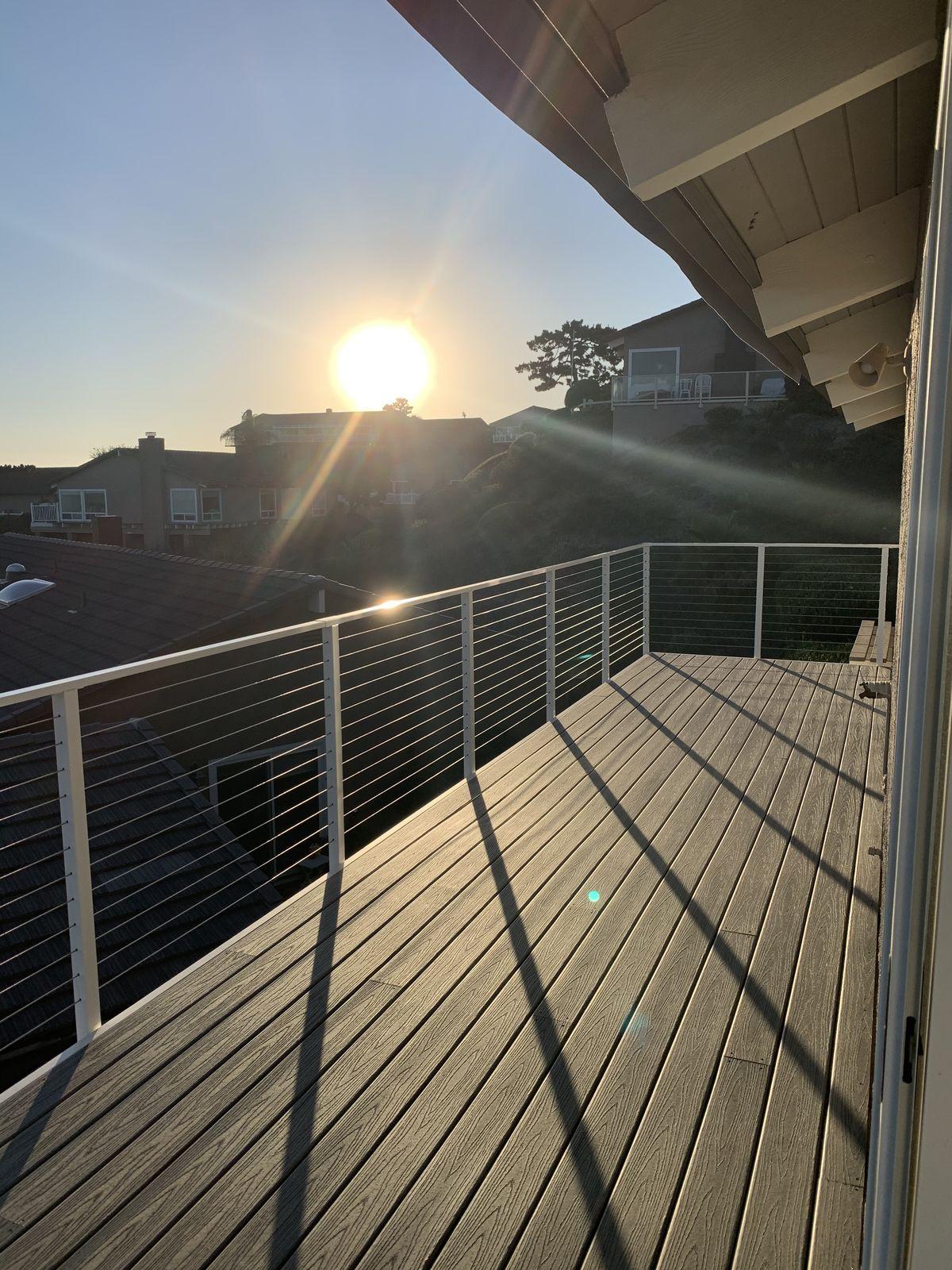
If you're building a deck near the ocean in Dana Point, pick the metal before you pick the boards. One structural connector manufacturer recommends Type 316, 305 or 304 stainless steel, silicon bronze or copper for salt air, and its New Zealand guidance names 316 as the best choice. Composite and PVC boards can work at the coast, but read the warranty first. Some ask for 316 screws or regular cleaning.
Board samples are the easy part to shop for. The boards are what you walk on and what you see from the kitchen window. The screws and joist hangers sit underneath, out of sight, where salt air can reach them for years before anyone crawls under to check.
Why the hardware deserves the first conversation
One manufacturer of structural connectors publishes a list of things that corrode its products. Ocean salt air is on it. So are treated wood, fertilizers, fumes, fire-retardants, de-icing salts and mixed metals.
Read that list again with a coastal backyard in mind. A deck in Laguna Beach or San Clemente can check several boxes at once: salt in the air, pressure-treated framing, a fertilized lawn next to the posts, and hardware made from more than one kind of metal. Every one of those is on the manufacturer's list.
The same manufacturer puts it plainly: "Even stainless steel can corrode."
Not all stainless steel is the same
304 vs 316 stainless for a deck
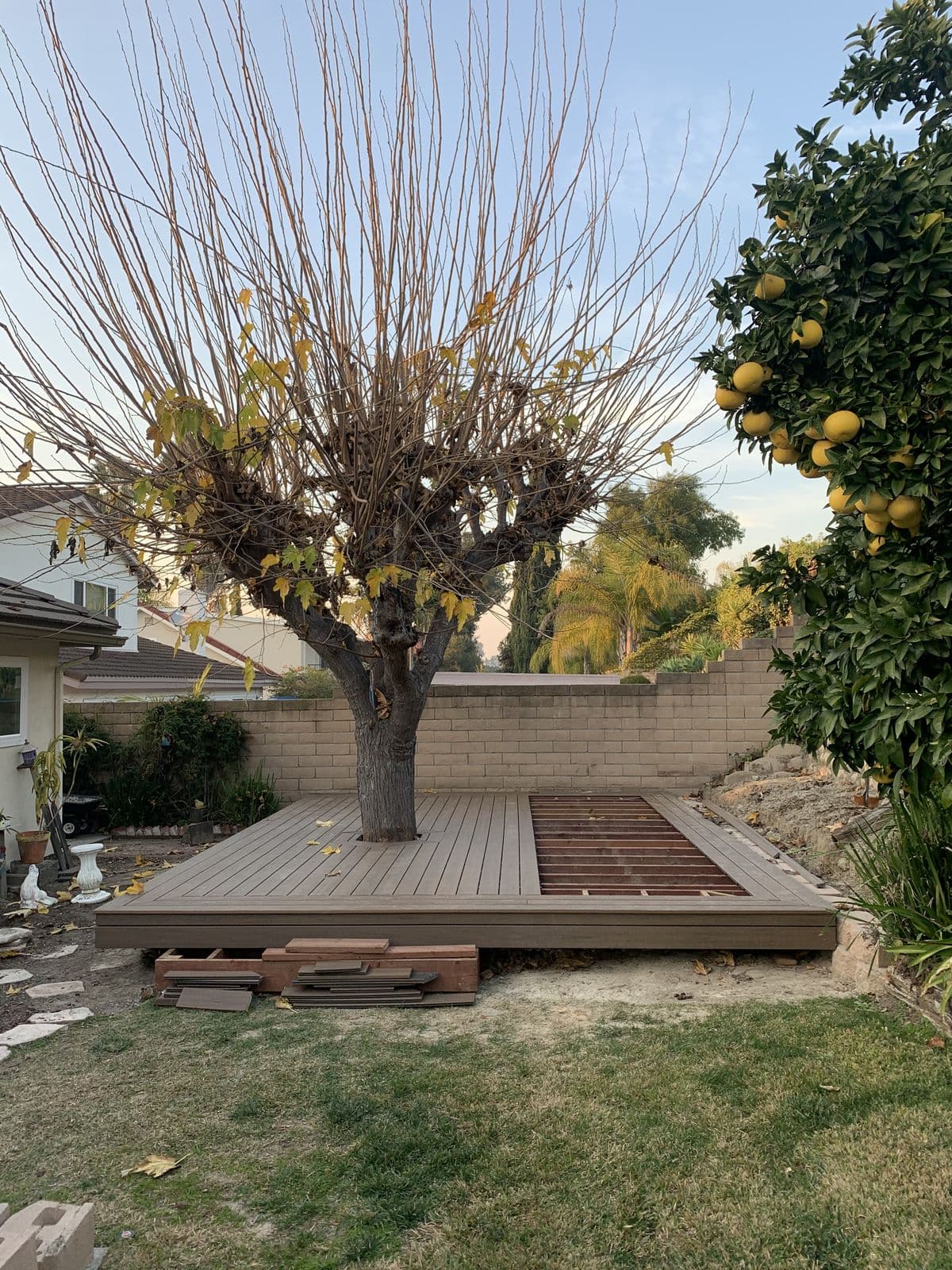
The connector maker lists Types 316, 305 and 304 stainless, along with silicon bronze and copper, as its best recommendation for ocean salt air and other chloride-heavy environments. Its New Zealand guidance goes a step further. It calls Type 316 the best choice for salt marine and chloride environments, regardless of the wood treatment chemical or the species of lumber.
So if you're asking which grade to use within sight of the water, the manufacturer's own answer points to 316.
When nobody knows what the wood was treated with
On a repair to an older deck, you may have no record of what chemical went into the framing lumber. If the treatment isn't fully known, the same manufacturer recommends a Type 300 series stainless product.
Leave the stainless bare
It's tempting to paint hardware to match the railing. Don't. The connector maker does not recommend painting stainless steel fasteners or hardware.
Pressure-treated framing and the metal it touches
If your deck has composite boards on top and pressure-treated lumber underneath, the framing has its own fastener rules.
BC Housing, a provincial housing agency in British Columbia, publishes a guide on ACQ-treated wood. It lists the compatible fasteners for ACQ and CA-B lumber as stainless steel, hot-dipped galvanized (G185) and polymer coated. It also warns that unsuitable fasteners in treated lumber raise the risk of galvanic corrosion.
Galvanized hardware is on that list for treated wood. The connector maker's salt-air recommendation doesn't include galvanized, though. It names stainless, silicon bronze and copper. Mixed metals are on its corrosion list too, so ask what every piece is made of, down to the bolts at the ledger.
Composite and PVC boards: read the coastal fine print
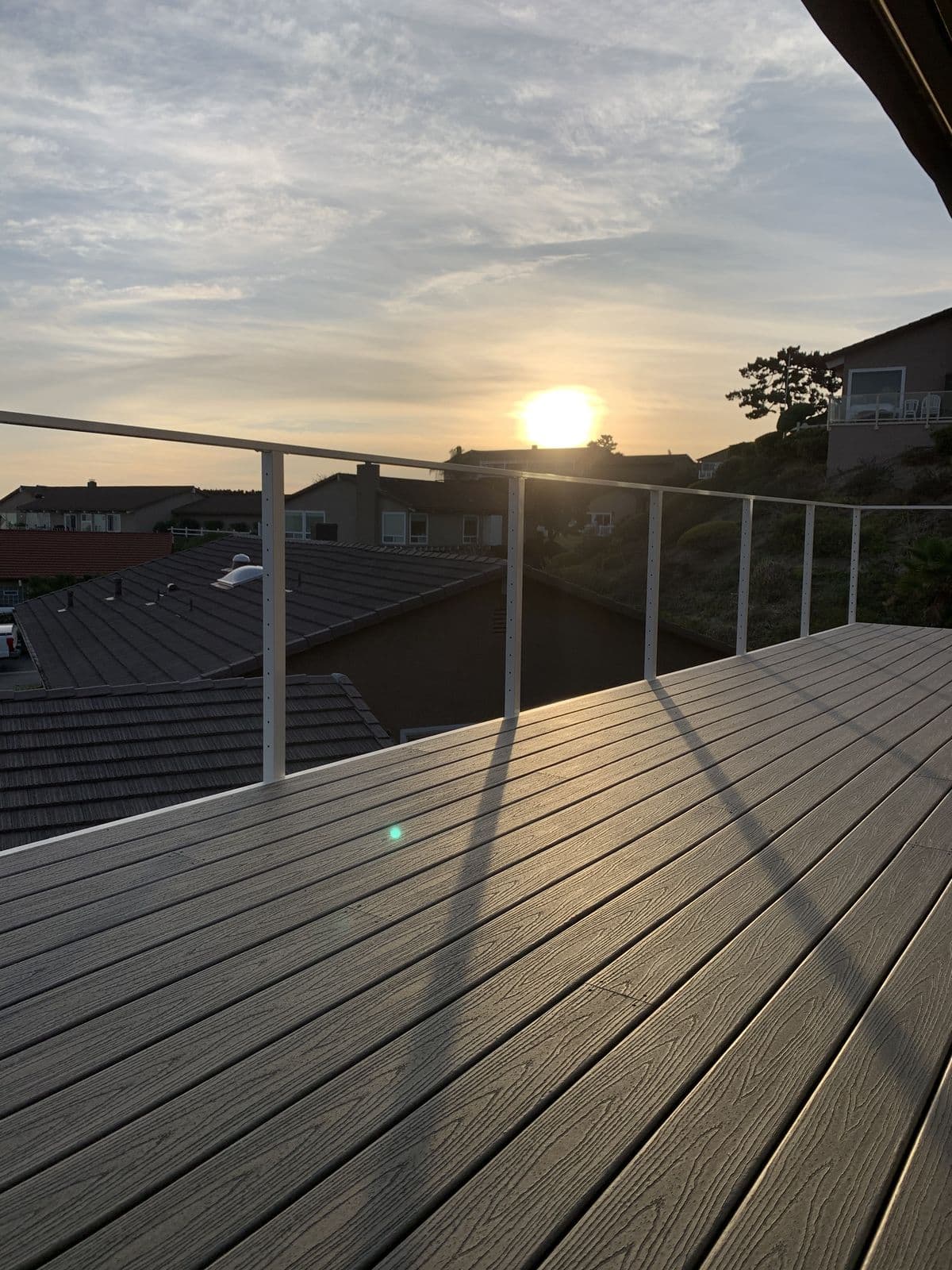
Before you choose a composite or PVC board, download the installation guide and the warranty for the exact product and search them for "salt" and "coastal." A few published documents had this to say.
- One composite and PVC decking maker suggests using its minimum fastener requirements in 316 stainless steel for salt water coastal installs.
- That same maker says a fastener it doesn't recommend won't void the warranty on its own, but a failure caused by that fastener may not be covered.
- Its 2021 installation guide lists decks or docks with framing in constant contact with saltwater among the uses it doesn't endorse.
- Another maker requires cleaning its railing every 6 to 9 months for installs near salt water to keep warranty coverage. It also tells owners to record the date, method and materials of each cleaning and to keep receipts from any cleaning service.
- One published version of that second maker's decking warranty excludes installation in salt water or in direct contact with a body of water, along with exposure to de-icing products containing salt. Warranties change, so check the current copy on the manufacturer's site.
How close to the water counts as "near"? Of the documents cited here, only one gives a distance, and it comes from a decking brand's outdoor furniture warranty. That warranty excludes hardware and fasteners exposed to saltwater conditions, which it defines as within 1,000 feet of salt water. It covers furniture, so it doesn't settle anything for a deck. It does show that a manufacturer can draw a specific line. If your decking warranty draws one, find out which side of it your house is on.
A cleaning schedule is easy to let slide. If your railing maker requires cleaning near salt water and you ever need to file a claim, the manufacturer says your log and receipts may be needed. A notebook with dates in it is cheap insurance.
A short checklist before you choose
- Ask what grade of stainless the deck screws, hidden clips and structural connectors are, and get 316 if the manufacturer recommends it for your setting.
- Get the installation guide and warranty for the exact board and railing, and read the coastal and salt water sections.
- If the framing is treated lumber, confirm the hardware is listed as compatible with that treatment.
- Keep metals matched instead of mixing whatever is in the truck.
- Leave stainless hardware unpainted.
- Put a cleaning reminder on your calendar and keep a log.
- On an existing deck, look underneath at the hangers and ledger bolts before you judge it by the surface boards.
Planning a deck near the water?
If you're planning a new deck, or you've spotted rust stains around the screws on the one you have, Carrieri Construction is a family-owned general contractor based in Dana Point (CSLB #1138940). We work in Dana Point, Laguna Niguel, San Clemente, Laguna Beach, Aliso Viejo and Irvine, and we handle the city permits on our projects. Call or text (858) 776-6692 or request a quote.
Have a project in mind? Tell us about it and we'll give you a straight answer for your actual house.