
Guides
Water Damage: What to Do in the First 24 Hours
Water damage at home? In the first 24 hours: stop the water, photograph it, call your insurer, start drying, and check any contractor's CSLB license.
October 26, 2026 · Carrieri Construction
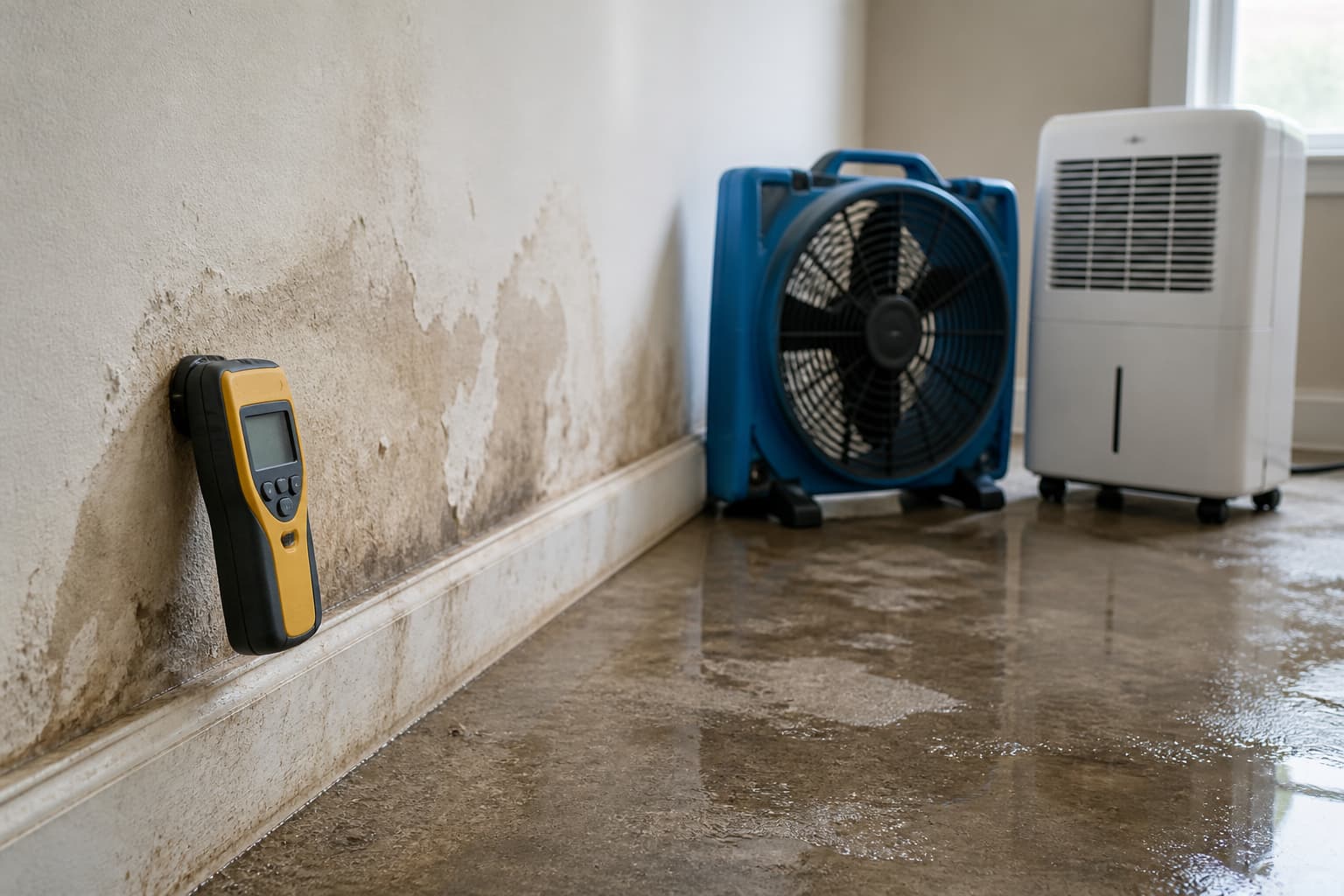
In the first 24 hours after water damage, do four things. Stop the water, photograph everything before you move it, call your insurance company, and start drying. The EPA says water-damaged areas and items should be dried within 24 to 48 hours to prevent mold. Make only temporary repairs until the adjuster has seen the damage, and keep every receipt.
Each of those steps has a catch, and the details below are where people tend to slip.
Stop the water first
Find the source and shut it off. The EPA's advice on mold starts here: fix plumbing leaks and other water problems as soon as possible. If the water is coming from a burst supply line, a leaking appliance or a failed fixture, close the valve that feeds it. If you can't find that valve, close the main valve to the house.
If rain is coming in through a damaged roof or a broken window, cover the opening. That is the kind of temporary repair the California Department of Insurance (CDI) tells homeowners to make.
Photograph it before you touch it
Your phone is the most useful tool in the house right now. Take photos and video of every wet room, the source of the leak, waterlines on the walls, and damaged belongings, all before you start moving things around.
CDI recommends making a list of damaged items, including brand names and model numbers for appliances and electronics. Do it while the details are in front of you. A week from now you won't remember the model of the TV that was sitting on the wet floor.
Call your insurer and ask for your policy
Call early, and describe what actually happened in plain words: a supply line burst, the water heater leaked, rain came in through a damaged section of roof. Wording matters here. According to CDI, standard homeowners policies don't cover flood, but they may cover other kinds of water damage. One example CDI gives is rain coming through a hole in the roof or a broken window when a covered event like wind made the opening. That's why it helps to name the real cause instead of calling everything a flood.
A few other CDI tips worth following from day one:
- Ask for a full copy of your policy, including the declarations page. Your insurer has to provide it free within 30 days of your request.
- Read the definitions section to see which types of water damage are covered and which are excluded.
- Keep a claim diary. Write down the date, the person you spoke with and what they said, every time.
- If the adjuster says something is excluded, ask them to point to the exact policy provision.
- Get at least one repair estimate of your own.
If you get stuck, CDI's consumer hotline is 800-927-4357.
Temporary repairs now, permanent repairs later
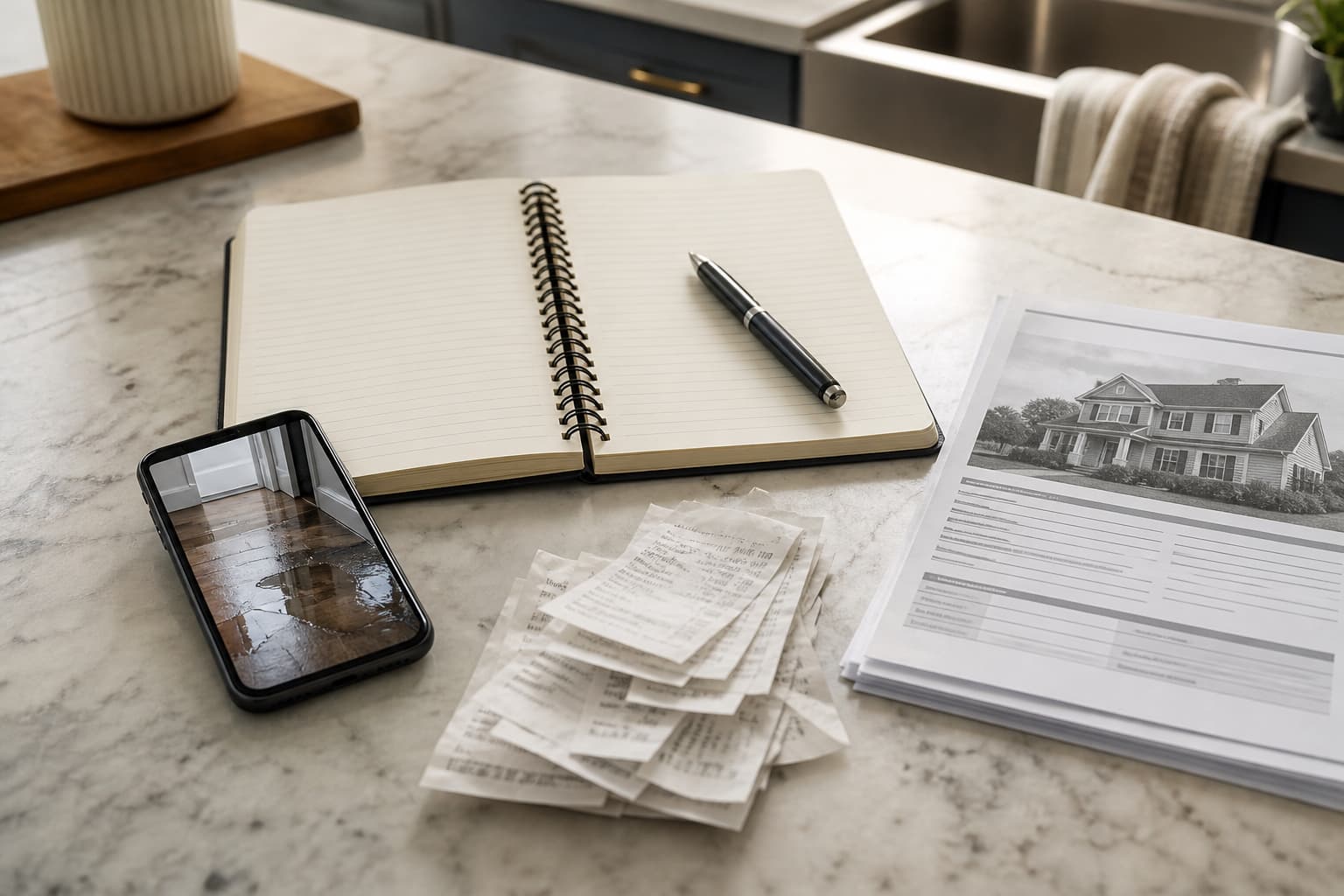
This is the part people get backwards. CDI says to make temporary repairs that prevent more damage, but not to make permanent repairs until the adjuster has seen the damage.
Doing nothing is also a risk. CDI's residential claims guide says a policy may not cover further damage if you didn't take reasonable steps to protect the property. The same guide says insurers reimburse reasonable protection costs when you keep receipts for materials. So protect the house, and save every receipt.
The guide also warns about contractors who push homeowners to spend heavily on temporary repairs. Those payments come out of your total settlement, which leaves less money for the actual rebuild.
If the house isn't safe to live in, keep receipts for hotel stays and other relocation costs. They may be covered under the loss-of-use (additional living expense) part of your policy.
Start drying the same day
The EPA puts it simply: the key to mold control is moisture control. Fix the leak, then dry everything completely.
What that means for the materials in a typical house:
- Drywall can often be dried in place if it isn't visibly swollen and the seams are intact. If it is swollen or the seams have opened, EPA guidance says to remove and replace it and ventilate the wall cavity if you can. Photograph it before it comes out.
- Carpet should be dried within 24 to 48 hours using an extraction vacuum, a dehumidifier and fans.
- Hard surfaces that grow mold can be cleaned with detergent and water and then dried completely.
- Porous materials like carpet and ceiling tiles may need to be thrown away if they get moldy.
Two common beliefs need correcting. First, the 24 to 48 hour window isn't a guarantee in either direction. Fast drying prevents mold in most cases, and a slow dry doesn't automatically mean you have it. Second, bleach isn't the answer. The EPA doesn't recommend chlorine bleach or other biocides as a routine part of mold cleanup.
If anyone in the house has asthma, COPD, allergies or a weakened immune system, keep them away from the area during mold cleanup.
Be careful who you let in the door
Emergencies bring out door-to-door sellers. The Contractors State License Board (CSLB) keeps a disaster page because scams rise after emergencies, and its advice is worth following for a single burst pipe too.
- In California, a license is required for any job of $1,000 or more in labor and materials, and for smaller jobs that need a permit or hired workers.
- Look up the license at cslb.ca.gov, and compare the contractor's pocket license with their photo ID.
- Don't hire the first person who shows up, and don't sign over your insurance payment checks.
- For home improvement work, the down payment can't be more than $1,000 or 10 percent of the contract price, whichever is less.
- The contract should include a written payment schedule, and payments can't run ahead of the work actually done.
In a declared disaster area, contracting without a license is a felony.
If you're in South Orange County
Carrieri Construction is a family-owned general contractor based in Dana Point, licensed by the CSLB under #1138940. We do water damage repair, we answer emergency water damage calls outside business hours, and we handle the city permits on our projects. We work in Dana Point, Laguna Niguel, San Clemente, Laguna Beach, Aliso Viejo and Irvine.
If water is coming in right now, or you're looking at a wet wall and wondering what's behind it, call us at (858) 776-6692 or request a quote.
Have a project in mind? Tell us about it and we'll give you a straight answer for your actual house.